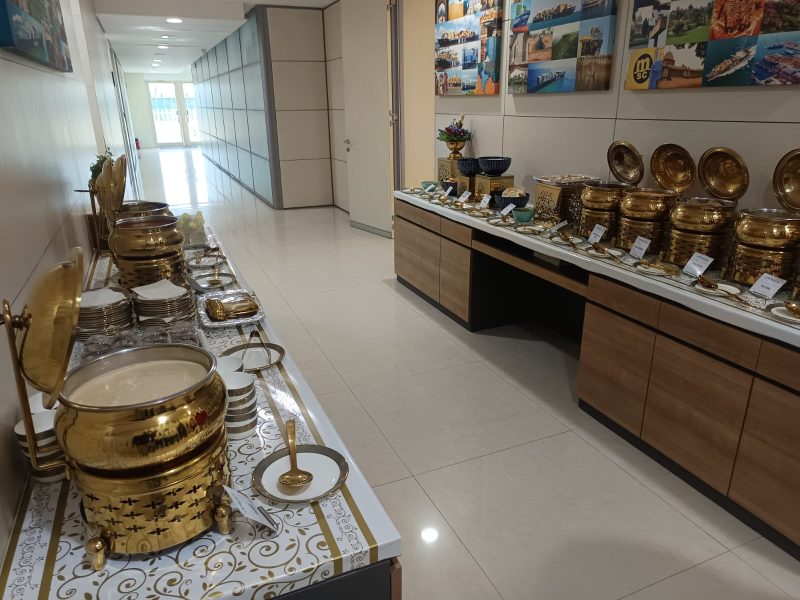


Conference Catering in Mumbai: Feeding 300 People in 30 Minutes
Conference catering is the hardest job in corporate catering. Everyone eats at once, the break is fixed, and the agenda doesn't wait. Here's how it's actually planned.
The arithmetic nobody does
Three hundred delegates. A thirty-minute tea break. That is ten people served every minute, without pause, for the entire break — and that assumes nobody stops to talk, which at a conference is the one thing everybody does.
This is why conference catering in Mumbai goes wrong so often. The food is fine. The maths was never done. The queue eats the break, the session restarts late, and by the afternoon the whole agenda has slipped.
Good corporate catering at conference scale is a throughput problem first and a menu problem second.
How we actually clear a large break
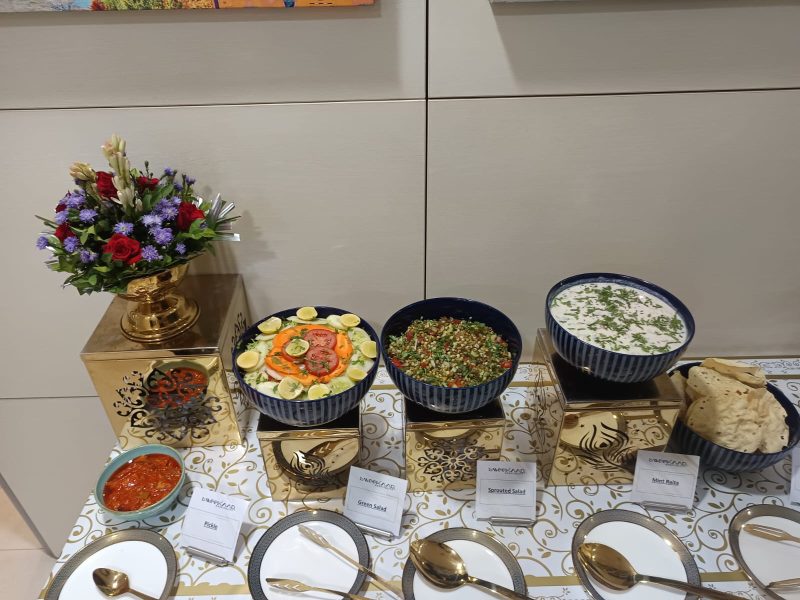
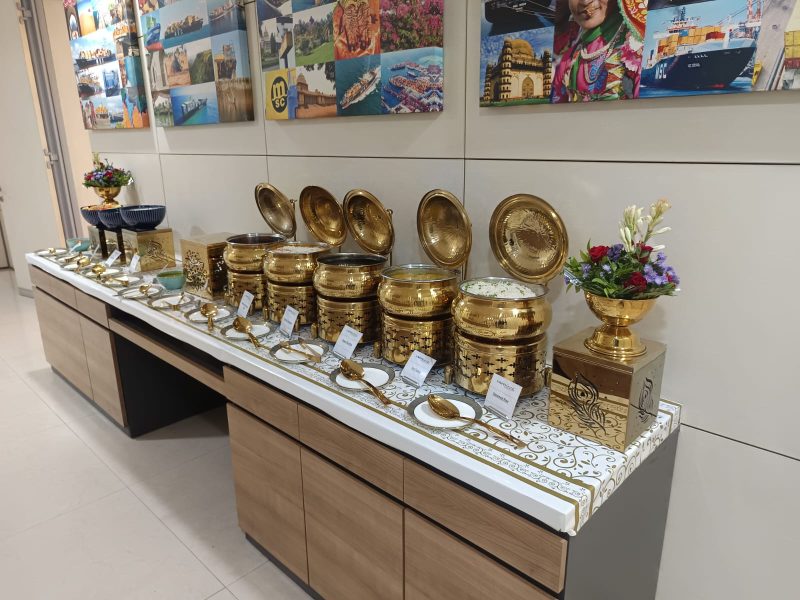
Multiple service points
One counter for 300 people cannot work. We split into four or six identical points around the room so no single queue forms. Identical is the key word — if one point has the popular dish, everyone goes there.
Setup before the session ends
Everything is laid out and hot-held while delegates are still seated. The break starts with food ready, not with our team unpacking.
Drinks separated entirely
Tea and coffee stations go on the opposite side of the room from food. People linger over drinks; keeping that away from the food line roughly halves queue time.
Pre-portioned where it counts
Anything that needs serving with a spoon slows the line. For tight breaks we pre-portion, so delegates lift and go.
For breaks under twenty minutes, we move to fully packed boxes distributed at the seats — the same approach covered in our corporate lunch catering work.
The three conference formats
Half-day seminar. One tea break, one light lunch. The risk is over-catering — delegates leaving at two won't eat a heavy meal at one.
Full-day conference. Morning tea, lunch, afternoon tea. The afternoon slump is real and it is caused by lunch. We build lighter mains and keep the heavy items off the menu entirely.
Multi-day event or exhibition. Rotation matters more than anything. Serving the same menu on day two is the fastest way to get complaints, however good day one was. Our Goregaon corporate catering covers exhibition work at NESCO in more detail.
Venue logistics across Mumbai
Conference venues have their own rules, and they differ sharply by district.
Hotel banquet halls often restrict outside catering entirely, or charge a corkage-style fee. Worth confirming before you plan anything.
Convention centres have loading bays and goods lifts, which makes life easier, but they schedule vendor access in slots. Miss the slot and you wait.
Office auditoriums in BKC and Lower Parel towers need vehicle passes, staff IDs and service lift bookings submitted the day before. We handle this rather than negotiating at the gate.
Co-working and startup spaces in Powai and Andheri are the easiest for access but often the tightest on floor space, which changes the service format.
Our kitchen is in Marol, Andheri East — twenty to thirty minutes from most Mumbai business districts outside peak.
Menus for a room of strangers
A conference room contains people you have never met and whose requirements nobody collected. That changes the menu entirely — you plan for the whole range, not the known headcount.
Every item carries a plainly worded label:
- Regular vegetarian
- Jain — no onion, no garlic, no root
- Vegan — no dairy
- Low oil
- No chilli
- Nut-free
Vegan is the label most often applied wrongly at Mumbai conferences. Paneer, ghee, curd and cream run through most Indian menus, and a dish marked vegan that contains any of them is worse than no label. Our vegan catering and pure veg catering pages explain how we separate them.
We also over-provision the Jain and vegan counts rather than matching them exactly. At a conference you cannot ask, and running out in front of delegates is not recoverable.
Hygiene at scale
Volume increases risk. FSSAI standards throughout, temperature-controlled transport, hot-holding with logged temperatures, uniformed staff, and a named supervisor on site for the full duration — not a phone number.
For recurring conference and corporate catering contracts, your team is welcome to visit our Marol kitchen beforehand. Most clients do.
What to tell us
1. Delegate count, and the confirmed-versus-expected split.
2. Break times and exact durations.
3. Venue name, floor and access rules.
4. Room size and where service can physically go.
5. Single or multi-day.
6. Whether external delegates or only staff attend.
Frequently asked questions
How many delegates can you cater for?
Conferences of several hundred are routine. The limit is usually the venue's service space, not our kitchen capacity.
Can you serve 300 people in a 30-minute break?
Yes, with multiple identical service points, setup completed before the break begins, and drinks stations separated from food. A single counter cannot do it.
Do you cater multi-day conferences?
Yes, with a rotating menu so delegates are not served the same food twice.
How much notice do you need for conference catering?
Two to three weeks is comfortable for large conferences, mainly so venue access and staffing can be arranged properly. Smaller seminars can be turned around faster.
Do you handle venue passes and loading bay slots?
Yes. Vehicle details, staff IDs and service lift or loading bay bookings are submitted in advance.
How do you handle dietary requirements when delegates are unknown?
We over-provision Jain and vegan portions rather than matching an exact count, and label every item clearly so nobody has to ask.
Can you cater at hotel venues?
Often yes, but many hotels restrict outside catering. Confirm the venue's policy before planning.
Corporate catering across Mumbai
BKC Andheri Lower Parel Powai Goregaon Bandra Colaba Thane Navi Mumbai All corporate catering
Planning a conference or seminar? Send us delegate numbers, break times and the venue, and we'll come back with a service plan and a written quotation.
Request a quotation