

Catering a Mumbai Wedding: Why Each Function Needs a Different Menu
Most families brief a wedding caterer once, for a guest count and a date. But a wedding is four or five separate events with different timings, different guests and different physical constraints — and the single biggest menu mistake is treating them as one job with the quantities adjusted.
Here is the clearest example. At the mehendi, half your guests have henna drying on both hands. They cannot hold a plate and a fork. If the menu is gravy-based and needs cutlery, those guests eat nothing for three hours — and they are usually the bride's closest people, sitting through the longest function of the week.
That is not a cooking problem. It is a briefing problem, and it repeats across every function in a different form.
The five functions, and what each one actually needs
| Function | The real constraint | What the menu should do |
|---|---|---|
| Haldi | Morning, informal, often at home, messy by design | Light, easy to serve outdoors, nothing that suffers from standing |
| Mehendi | Guests' hands are occupied for hours | One-handed food, no cutlery, served continuously not in one sitting |
| Sangeet | Late, high energy, people dancing between eating | Live counters running late, food in bursts rather than one service |
| Wedding day | The muhurat dictates everything, and may be at any hour | Service built backwards from the ceremony, not from a normal mealtime |
| Reception | Formal, staggered arrivals across hours, widest age range | Food that holds quality from the first guest to the last |
Mehendi: the one-handed rule
This function runs longest and gets the least thought. Guests sit for three or four hours with wet henna. Anything requiring two hands, a fork or a plate balanced on a knee is food they will politely decline.
What works at a mehendi
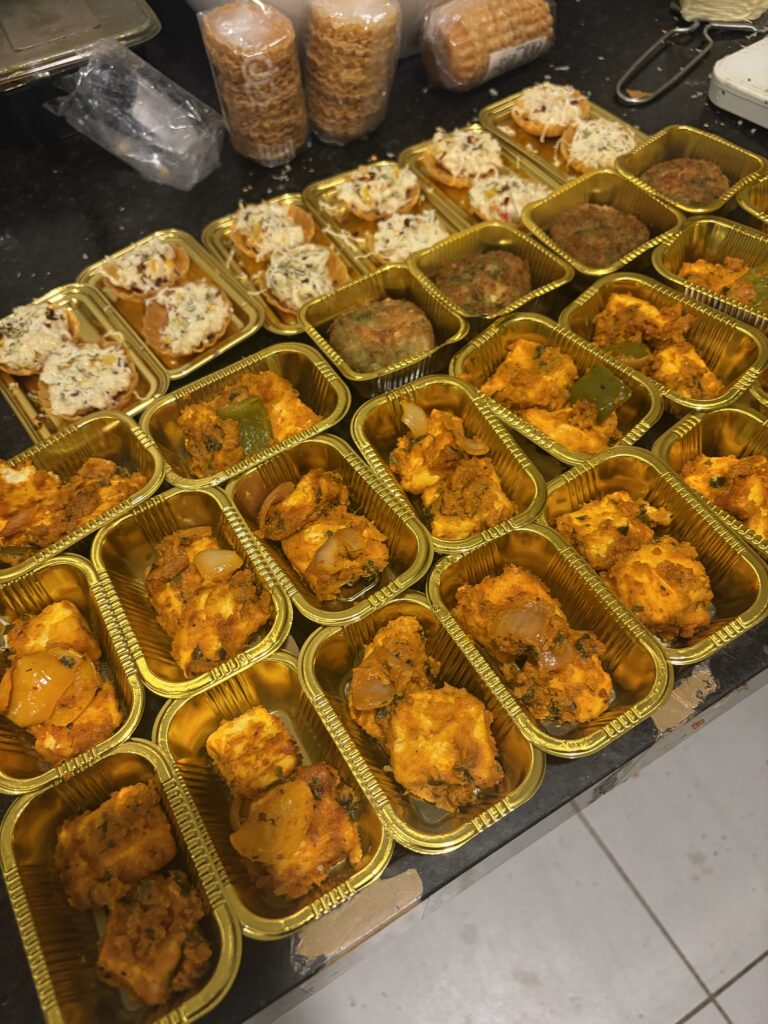
- Skewers, rolls, stuffed breads, anything held in one hand or fed by someone else
- Chaat served in a cup rather than on a plate
- Beverages with straws, not open glasses
- Continuous passed service rather than a buffet people have to get up for
- Staff who understand the situation and will actually offer food to someone who can't reach for it
That last point matters more than the menu. A buffet at a mehendi quietly excludes the people the function is for.
Sangeet: nobody eats in one sitting
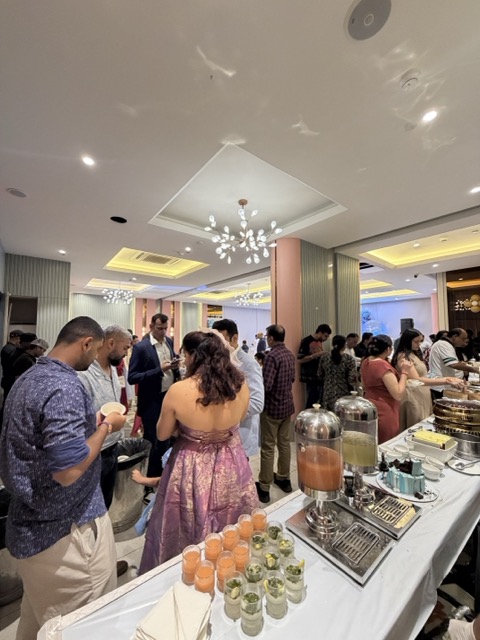
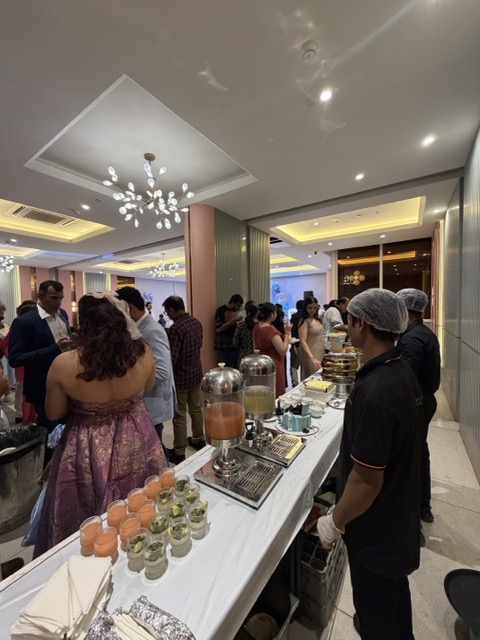
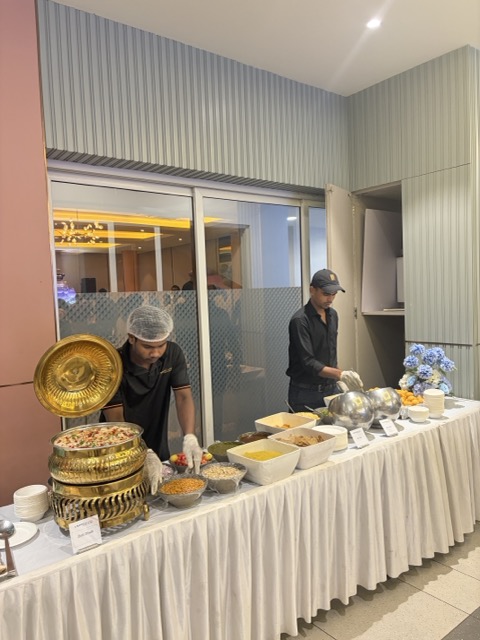
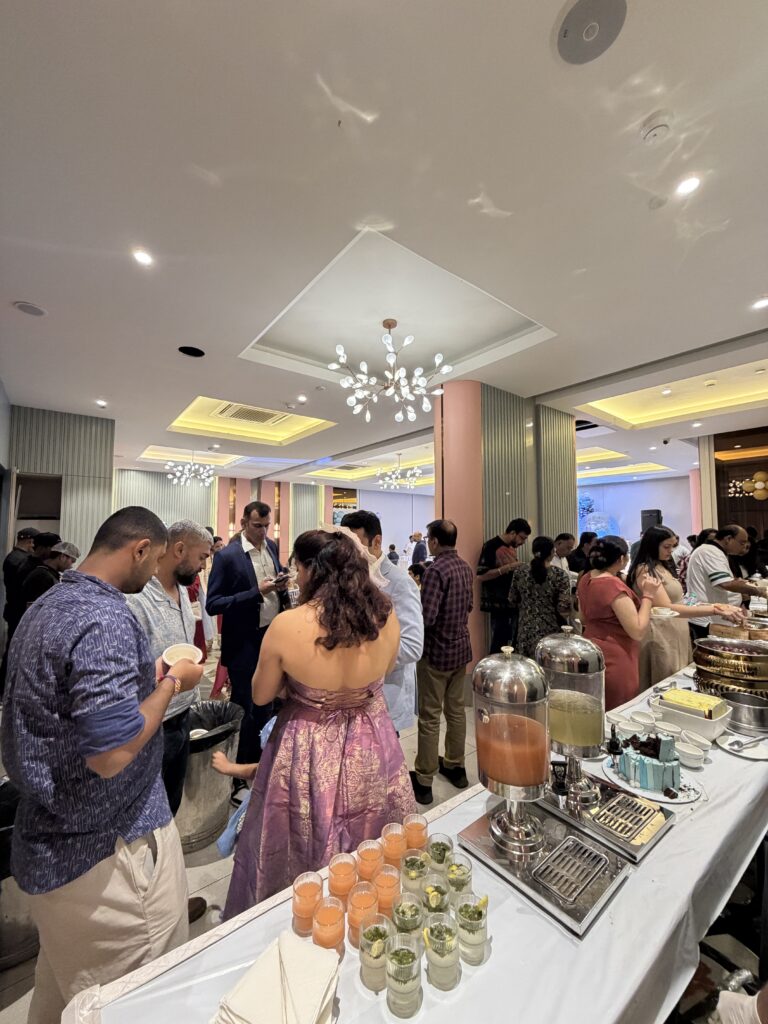
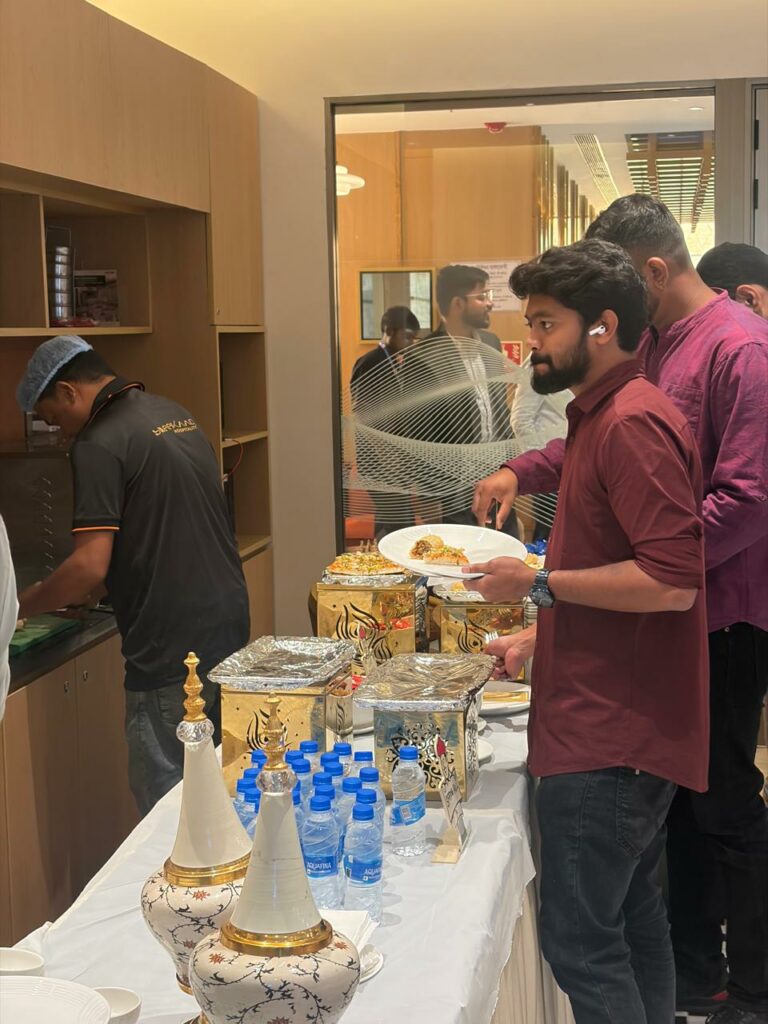
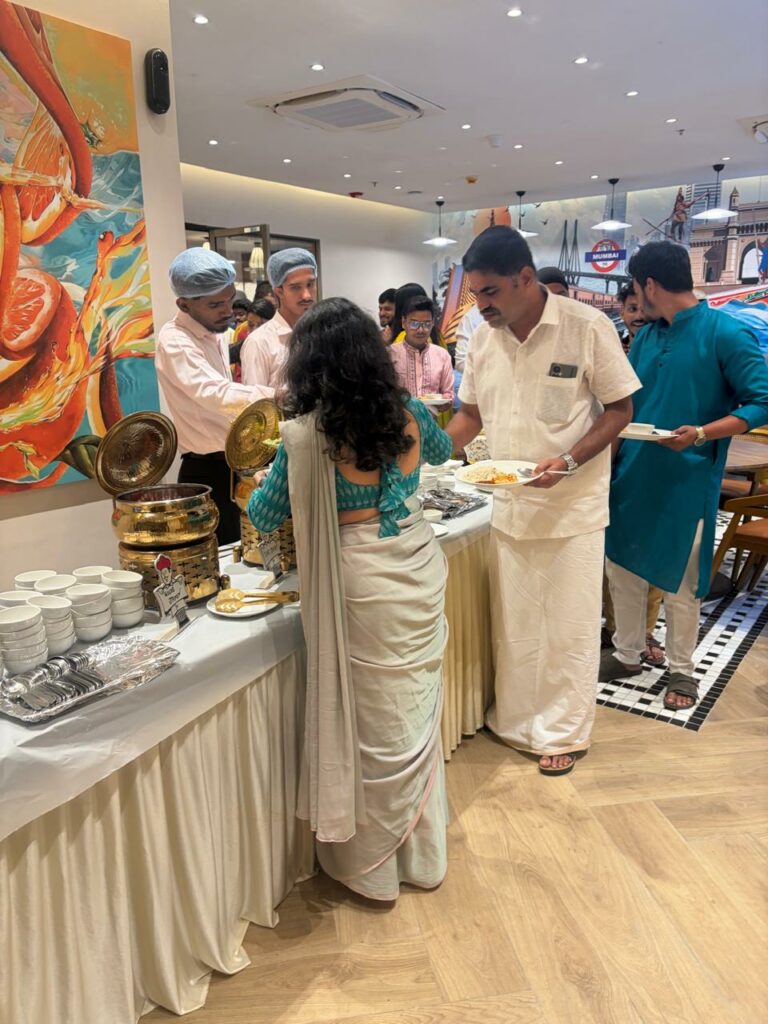
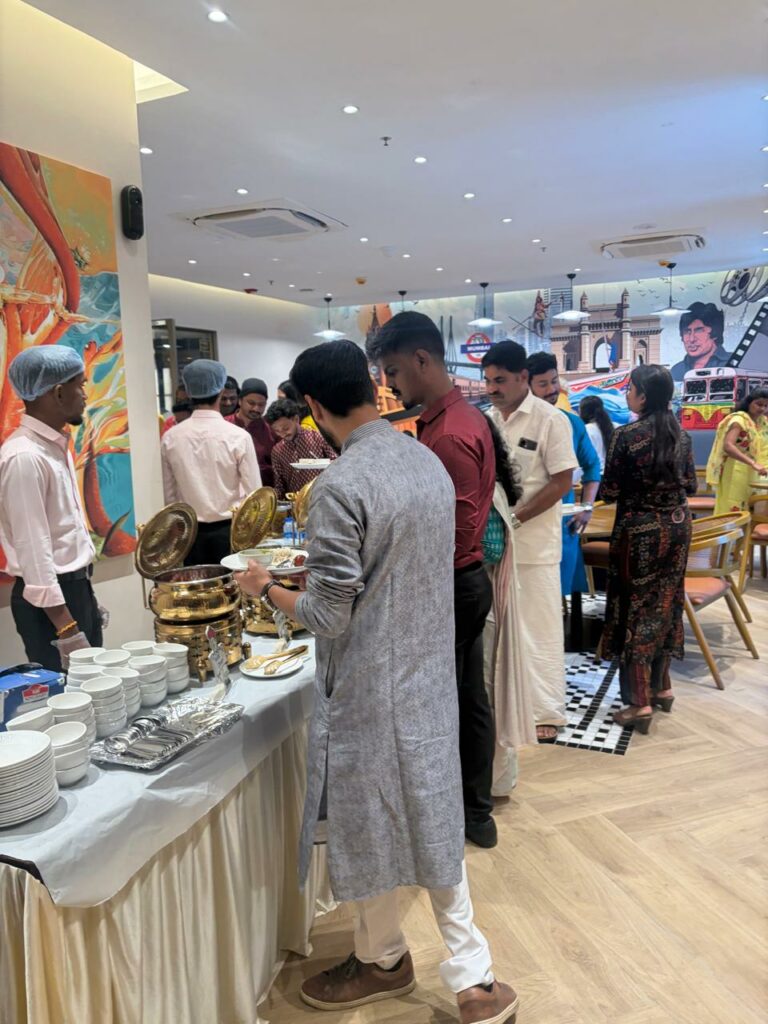
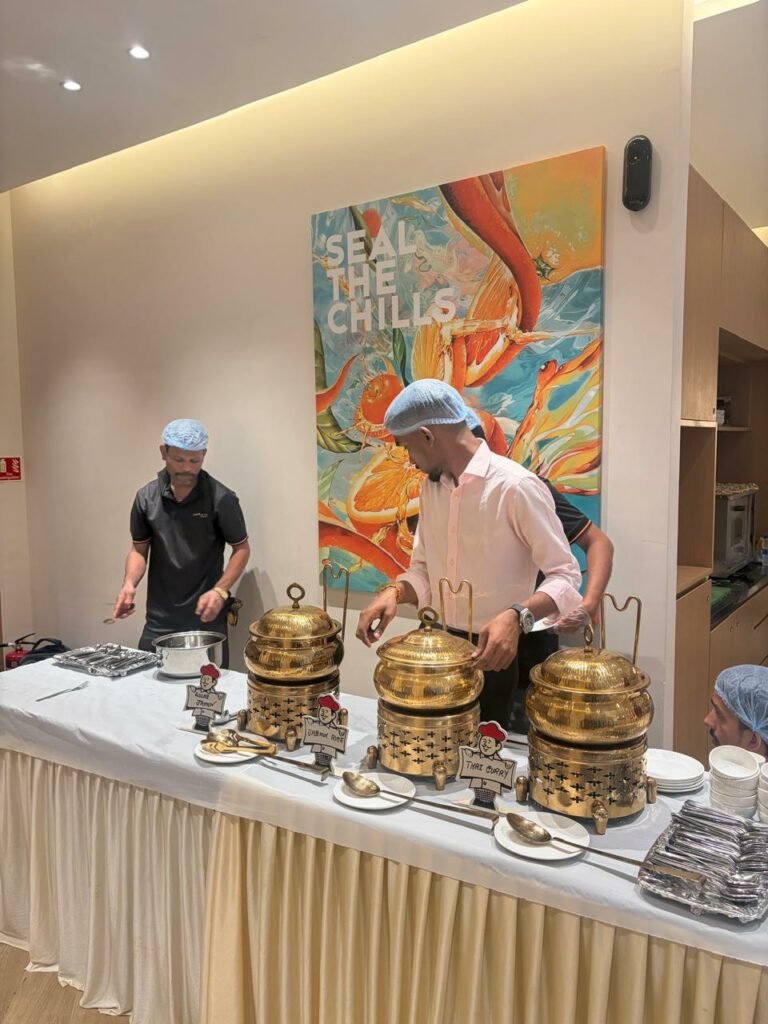
At a sangeet people eat in bursts between performances and dancing. A buffet laid out at eight and left is cold and tired by the time most guests reach it. Live counters firing through the evening keep the food correct and keep people moving rather than queuing.
A buffet set out and left is a meal that gets worse every hour. At a sangeet, the last guest to eat is often the one you most wanted to impress.
Wedding day: the muhurat decides your kitchen schedule
An auspicious time can fall at four in the morning or close to midnight. Everything — prep, transport, staffing, service — is built backwards from that, not from when people normally eat.
Make sure your caterer has the muhurat in writing early, not the "roughly evening" version. A ceremony at 11pm and a ceremony at 7pm are completely different operations for the kitchen, and the difference cannot be absorbed on the day.
Reception: guests arrive across hours
Receptions are the function where quality most often slips, because arrivals spread across three or four hours while the food was produced for one. The answer is the same as at a sangeet: batch service and live counters, so the guest arriving at eleven eats what the guest at eight ate.
The guest list is not the same every day
Families plan menus as if the same people attend everything. They do not.
Who's actually there
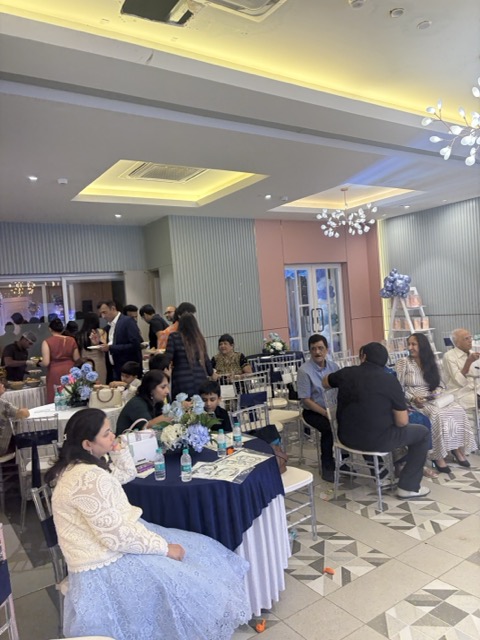
Haldi and mehendi are close family and friends — smaller, younger on average, more informal. The wedding day brings the full extended family and the elderly. The reception brings colleagues, acquaintances and a broad age range who may not know each other.
Why it changes the food
A menu that delights a mehendi crowd can be wrong for a reception where half the guests are senior and expect something more traditional. Spice levels, richness and presentation should shift across the week, not stay fixed.
Dietary requirements move during the week too
Someone fasting before the ceremony eats differently that day. Jain guests may attend one function and not another. A pure vegetarian household hosting a mixed guest list has decisions to make that are easier settled once, in advance, than renegotiated at each function.
Establish once, for the whole week: whether the kitchen is fully vegetarian, whether Jain items are a planned menu with their own counter and serving spoons, and whether fasting menus are properly prepared or a fruit plate. Then it does not come up again.
What to brief your caterer, function by function
- The muhurat — the exact time, in writing, as early as you have it
- Each function's venue — they are often different, with different kitchen access
- Expected numbers per function, as ranges, not one figure for the week
- Service style per function — passed, counters, buffet or seated
- The mehendi constraint — say it explicitly; most caterers won't raise it
- How long guests will arrive over at the reception
- Dietary requirements for the week, including fasting on the ceremony day
What goes wrong most often
- One menu planned for the whole week with only quantities changed
- Gravy-based food at the mehendi
- A buffet left standing at the sangeet while people dance
- Service timed to a normal dinner hour rather than to the muhurat
- A reception menu produced for one service when guests arrive over three hours
- Jain food plated from the main counter with the main serving spoons
- The same spice level for a mehendi crowd and a reception with elderly guests
Common questions
Should one caterer handle all the functions?
Usually yes, if they genuinely plan each one separately. The advantage is continuity — one team that knows your family, your venues and your dietary requirements by the third function. The risk is a caterer who takes the whole week and serves variations of one menu. Ask how they would change the mehendi menu from the reception menu; the answer tells you which you are dealing with.
What food works best at a mehendi?
Anything that can be eaten with one hand and no cutlery — skewers, rolls, stuffed breads, chaat in a cup, drinks with straws. Just as important is passed service rather than a buffet, because guests with wet henna cannot get up and serve themselves.
How do we handle a ceremony at an unusual hour?
Tell the caterer the muhurat as early as you have it, in writing. Prep, transport, staffing and service all get built backwards from that time. A 4am ceremony and a 7pm ceremony are completely different operations, and the difference cannot be absorbed on the day.
Can a vegetarian wedding menu work for a mixed guest list?
Yes, when it is built as its own menu rather than as the non-vegetarian one with items removed. Regional variety across counters, proper live stations and courses that carry an evening make it something nobody remarks on. A thin menu is what gets noticed, not the absence of meat.
How do we plan numbers when attendance varies by function?
Give a range per function rather than one figure for the week. Haldi and mehendi are usually close family, the wedding day brings everyone, and the reception is the widest and least predictable. Planning all three to the same number means over-catering twice and under-catering once.
Is your kitchen fully vegetarian?
Yes. We run a pure vegetarian kitchen with no non-vegetarian preparation on any shared equipment, so households with strict requirements do not have to take anyone's word for it. Jain menus are prepared without onion, garlic and root vegetables, with their own counter and serving spoons, and fasting menus are cooked on separate equipment with sendha namak.
Planning a wedding this season?
Tell us the dates, the venues and roughly how many people at each function. We will come back with a menu for each one — not one menu with the quantities changed.
Check our availabilityRelated: wedding catering in Mumbai, booking a caterer in peak season, what drives wedding catering cost and pure vegetarian catering.